

Just Cause
Sharon Block on advancing workers’ rights at the level of the City

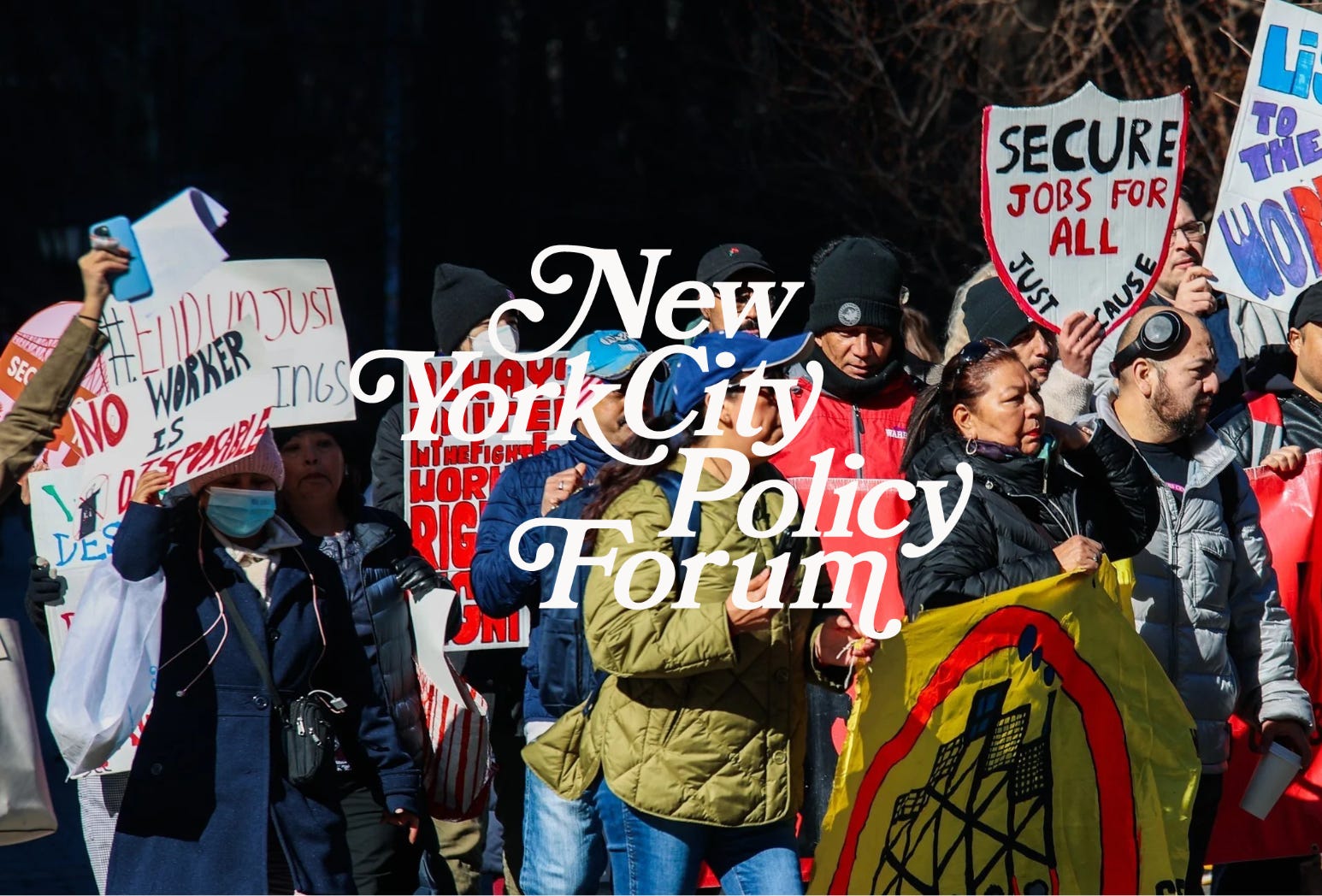
Sharon Block on how to flip the script on at-will employment and give workers stronger security on the job.
Imagine you show up to work one day and your boss tells you that you are fired. When you ask why, you’re told by your boss that they just don’t think you are a good fit anymore. Or that they just don’t like you. Or maybe they don’t give you any reason at all. You have a sneaking suspicion that something more is at issue—maybe your boss’s change of heart about you has to do with your complaining about low pay or unsafe conditions or that you openly support different politics than they do.
In almost all of the United States, unless you’re one of the 5.9 percent of private-sector workers with a union contract, there isn’t much you can do to contest your firing. That’s because in almost all of the US, workers are subject to “employment at will.” That means they can be fired for a good reason, a bad reason, or no reason, as long as it isn’t an unlawful reason. (And every day the scope of unlawful discrimination seems to get smaller.) That makes the US unique relative to most other rich countries, and it leaves US workers uniquely vulnerable to arbitrary and unfair treatment.
Returning to the scenario where you’ve just been fired. Even if you think that you were discharged as retaliation for sticking up for your rights in the workplace—which would make it an unlawful firing—you now have to prove that, which requires a Herculean effort navigating a system skewed to favor employers, during which you are probably going to go without a paycheck. And things are getting worse: enforcement by the Trump Administration’s Department of Labor is down by 45 percent at Occupation Safety and Health Administration (OSHA) and a staggering 94 percent in their Wage and Hour Division. The situation is clear: workers cannot count on federal agencies to protect their rights.
The new Mamdani administration can right this legal wrong in innovative and effective ways, improving labor standards enforcement to protect New York City workers. Imposing “just cause” standards on employers in New York City would flip the at-will employment script. With a just-cause standard, employers would have to provide the rationale for firing a worker, instead of putting the burden on fired workers to figure out why they’ve been terminated. Since employers definitionally hold the information about what happened, this shouldn’t be too heavy a burden—at least for those who haven’t done anything wrong.
New York City is home of one of the first major forays into extending just-cause protections. Since 2021, under the Fair Workweek Law, fast food workers have been protected by a just-cause standard. And in December the Council passed a bill extending just-cause protections to rideshare drivers and delivery workers deactivated by their technically-not-employer platforms. There is even a bill waiting for the City Council—the Secure Jobs Act—to extend this standard to all workers in NYC.
The new administration could work with the Council to pass the Secure Jobs Act and enact the ridehail driver protection legislation. It can also use the City’s procurement power to limit contracting to companies that agree to abide by a just-cause standard—promoting better, more efficient contracting. The new Mayor could propose to work with the Council to extend just-cause protections sector by sector, starting with those whose workers are the most vulnerable and lowest paid, such as the non-fast food restaurant industry, retail, nonunion maintenance and cleaning staff, and personal care workers. Proceeding sector by sector would allow the Mayor and his administration to educate those workers—and the broader public—about their rights on the job, showing again and again a deep understanding of the workers who make New York City run.
A new Mayor has a major opportunity to signal to New York City’s workers that he has their backs. Workers who are confident that they can’t be fired without reason are able to concentrate on their work and help build the economy the Mayor hopes for; and workers who can advocate for fair pay are less likely to be priced out of New York City. The Mamdani Administration should therefore treat Just Cause and other worker protections as key planks of the broader affordability agenda.
Sharon Block is the Executive Director of the Center for Labor and a Just Economy at Harvard Law School. She has held key labor policy positions across the legislative and executive branches of the federal government, including as the Administrator of the Office of Information and Regulatory Affairs and a member of the National Labor Relations Board.