


Arielle Swernoff on using climate legislation to enhance New Yorkers’ near-term quality of life.
Local Law 97, New York City’s landmark climate law, aims to reduce building-based emissions by 40 percent by 2030. Because buildings account for roughly two-thirds of the city’s total greenhouse gas emissions, ensuring compliance with the law represents the Mamdani administration’s most consequential opportunity to address climate change.
Yet as the administration already recognizes, these efforts are also inextricably linked to affordability and quality of life. This is particularly so for the city’s two million rent-stabilized tenants, who often bear the burdens of living in poorly maintained, energy-inefficient buildings. Tenants throw open windows in the dead of winter because steam radiators overheat their homes; they are kept awake by these same radiators clattering, clanging, and hissing; and they burn themselves on exposed steam pipes.
If we do it right, implementing Local Law 97 can help tackle these longstanding problems, as nearly a third of the properties covered by the law are rent-stabilized buildings. To realize this potential, however, we need a better understanding of how compliance works in rent-stabilized buildings, the barriers to compliance, and the steps the city can take to ensure that tenants experience these changes as meaningful improvements to their homes and quality of life.
Quieter, Safer, More Comfortable Apartments
How, exactly, would compliance with Local Law 97 help solve widespread quality-of-life problems for NYC tenants? Under the law, rent-stabilized building owners are allowed to follow the article 321 compliance pathway, also known as the “prescriptive pathway.” This pathway requires a number of low-touch upgrades that would provide significant, tangible benefits to tenants.
Overheating: In New York City, nearly 80 percent of buildings (including the vast majority of rent-stabilized buildings, which tend to be older) are heated by steam. And as nearly everyone who has lived in the city knows, these systems often function poorly. According to one survey of New York City tenants with steam heat, nearly 70 percent report being chronically overheated in the winter, with 63 percent of tenants opening the windows for temperature control despite freezing temperatures outside. At the same time, poorly balanced steam systems can leave residents in the same buildings feeling too cold. Tenants are desperate for solutions: this same survey found that 81 percent of tenants with steam heat want more control over the temperature in their homes.
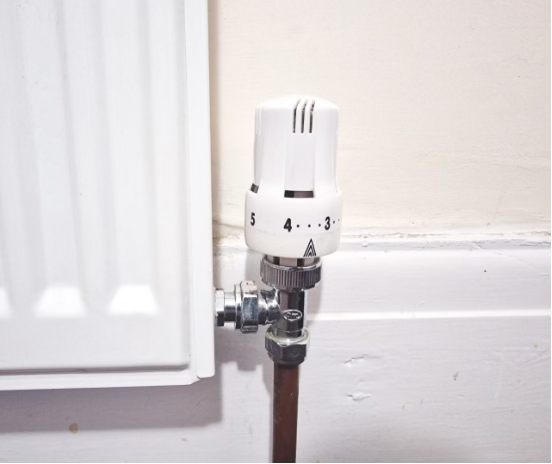
Under Local Law 97, landlords in covered buildings are required to install individual temperature controls on radiators. While many radiators currently have a valve, these valves typically function merely as an on-off switch and do not effectively control the temperature of the apartment. Thermostatic radiator valves, at retail prices, cost $15–$100 per valve. These products, which are common in Europe, are compatible even with the older steam heating systems in many pre-war buildings.
Additionally, to comply with Local Law 97, landlords must provide “set points” for heat and hot water above required “heat season” temperature minimums. Installing weather responsive heat sensors (thermometers connected to the boiler), both indoors and outdoors, can ensure that boilers run more efficiently and prevent them from running at full bore on warmer days.
Radiator Noise: Radiator noise is another common New York City quality of life concern, as nearly half of New Yorkers with steam heat report that radiator noises interrupt their sleep. The particularly annoying “water hammering,” the loud banging noises that New Yorkers hear emanating from their radiators, is generally caused by clogs, uninsulated pipes, and damaged steam traps. Under Local Law 97, landlords in covered buildings are required to make improvements to steam heating systems, including cleaning dirty and clogged system components, replacing worn-out parts, repairing leaks and steam traps, and installing or upgrading venting, all of which will increase performance while reducing noise.
Exposed Steam Pipes: Many New Yorkers live with exposed steam pipes in their apartments, which can cause scalds and burns, and which are particularly dangerous for children.
Insulating these pipes (both those visible to tenants and those not), as required by Local Law 97, will increase energy efficiency, reduce heat leakage, reduce the wait time for hot water, and reduce the risk of burns and apartment fires from hot surfaces.
Drafts: Another common problem in rent-stabilized, typically older buildings is that they are drafty. Under Local Law 97, landlords of rent-stabilized buildings are required to perform “envelope improvements.” A building’s envelope is everything that separates the inside of the building from the outside, including walls, roofs, windows, floors, and doors. Landlords or their contractors must visually inspect the envelope—around the exterior of the building, in all common areas, and in 10 percent of tenant occupied areas—and seal drafts with caulking, weather stripping, and the like. These improvements, while relatively inexpensive, will make buildings more efficient and reduce drafts.
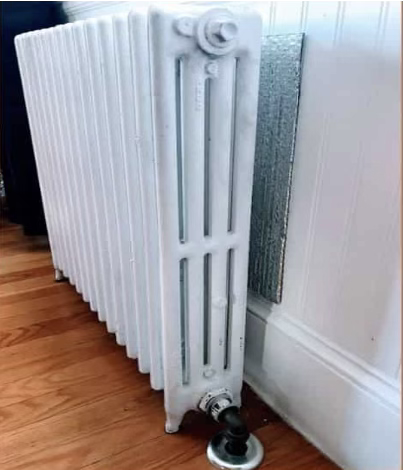
Additional Efficiency Improvements: Buildings are the largest source of climate emissions in New York City, and overheating our buildings, combined with deferred maintenance of steam heat systems, contributes to both climate emissions and local air pollution. Alongside the upgrades listed above, the remaining improvements seek to increase efficiency and reduce overall building emissions. These include additional improvements to steam heating systems, insulating hot water tanks, and installing reflective barriers behind radiators. These barriers, which cost $2–$3 per square foot at retail prices, reduce the amount of heat absorbed into the wall, and when installed correctly, do not impact the appearance of the room.
Finally, covered buildings must install efficient lighting and upgrade high-speed exhaust fans (for example, in kitchens, bathrooms, and laundry rooms) to run on a timer to reduce wasted energy.
Removing Roadblocks to Compliance
These required upgrades were supposed to be completed by August 2025, with reporting required by the end of December 2025. Unfortunately, while compliance reports are not yet available as of this writing, there is good reason to believe thatmany landlords have not made these improvements. During door-to-door canvassing of thousands of rent-stabilized tenants, Tenants for Healthy Homes found only one building where Local Law 97 improvements had been made. Indeed, most tenants had no idea that they are even entitled to these upgrades.
There are several reasons that landlords are broadly non-compliant. First, failure to comply merely results in a $10,000 fine per building, which is inadequate relative to rental income. Second, there is a lack of oversight: In order to comply with Local Law 97, landlords must pay professionals holding certifications in areas such as retrocommissioning and building design to certify to the city that upgrades have been made. At present, the Department of Buildings does not have the staffing capacity perform adequate oversight for these certified professionals, nor to inspect or spot-check buildings to ensure compliance. Finally, tenants have no reporting mechanism. Even if a renter knows their landlord has not installed radiator valves, there is no way for them to inform the city.
To improve compliance, the Mamdani administration should pursue both tenant- and landlord-focused solutions. On the tenant side, the administration could add 311 categories that allow tenants to report a lack of compliance with Local Law 97. It could also use the city’s outreach agencies to ensure that tenants are aware of these entitlements. For instance, the city could send a mailer to tenants in all buildings governed by the prescriptive pathway that explains the required upgrades and provides instructions for reporting non-compliance.
On the landlord side, there are several ways the city could make it easier to comply. The city could use capital funds, municipal bonds, or other low-cost public funds to cover the cost of upgrades, which with the right program design can be recouped over years via property tax assessments (these can be conditioned on tenant protections). The city could also provide one-stop or turnkey services for building owners, including planning, contracting, and bulk purchasing of equipment. In the specific case of Article 321, the component parts and work needed to comply, including thermostatic radiator valves and steam system optimization, are inexpensive, but they would be even more cost-effective if New York City used its bulk purchasing and price negotiating power. One example of this model is the NYCHA Clean Heat for All program, which used the bulk purchasing power of NYCHA to spur the creation of custom-designed, window-mounted heat pumps, thousands of which are now being successfully deployed at public housing developments in Queens. Finally, the city could encourage bundled contracts that aggregate customer demand by grouping similar buildings with comparable upgrade needs, making projects easier to execute and reducing costs through economics of scale.
A Winning Issue
Improving compliance with Local Law 97 would have real impacts for more than two million rent-stabilized New Yorkers, in terms of safer, more comfortable apartments. It also represents an opportunity for the Mamdani administration to notch a political win that tackles one of the most stubborn issues of our housing stock: quality. The city’s affordable housing stock is old and frequently in disrepair; the low-cost improvements discussed above could help revive people’s faith in the government’s ability to ensure that housing maintenance and improvements occur.
This approach, if communicated well, also provides an opening to change the politics and image of Local Law 97 and climate legislation in general: instead of forcing people to “eat their vegetables” via expensive and confusing mandates to comply with climate law, it could be seen as a tool to improve people’s near-term quality of life. This is especially critical with looming Local Law 97 filing deadlines approaching in 2030. New York City can be a leader in using climate legislation to ensure its residents live in greater comfort and dignity.
Arielle Swernoff is the director of Tenants for Healthy Homes, tenants who advocate for policies that ensure our homes are comfortable, safe, efficient, and affordable.